

Dubai’s Advantage: Why GCC Businesses Choose Maxell Power for Solar Projects
February 25, 2026
How Free Zones Reduce Logistics Costs for Solar Equipment
March 5, 2026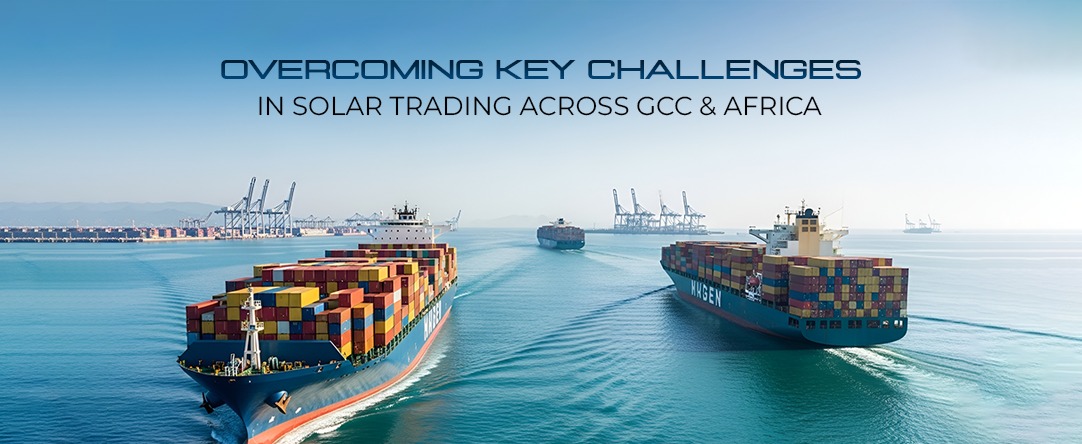
Solar trading across the GCC and Africa is expanding at a serious pace, but it is not as simple as importing panels and shipping containers. Governments are accelerating clean energy targets, private investors are entering aggressively, and utility-scale projects are redefining procurement models. Yet traders, distributors, and project developers continue to face operational bottlenecks that slow down market growth.
According to the International Renewable Energy Agency’s 2024 regional outlook, the Middle East added over 5 gigawatts of new solar capacity in a single year, while North African markets like Egypt and Morocco continued expanding utility-scale procurement. This rapid growth increases demand for reliable renewable energy solutions in MENA, but it also exposes structural weaknesses in supply chains, financing models, and regulatory alignment.
For a forward-thinking solar energy company in the Middle East, understanding these challenges is the difference between scaling successfully and losing margin in a competitive market.
Regulatory Complexity Across Multiple Jurisdictions
Solar trading across GCC countries differs significantly from operations in North Africa. Each country has unique import policies, customs structures, and certification requirements.
Grid Code Variations and Certification Barriers
In Saudi Arabia, grid compliance requirements for inverters and storage systems are strict and frequently updated. In the United Arab Emirates, project approvals depend on emirate-specific regulations. Meanwhile, in Egypt and Morocco, tender-based procurement dominates large-scale projects.
This regulatory fragmentation affects commercial solar systems in the Middle East because suppliers must adapt documentation and technical compliance for each market. Without proper alignment, shipment delays and project holdups become common.
For traders offering commercial solar solutions in North Africa, local testing standards and customs clearance timelines require close coordination with certified partners.
Logistics and Supply Chain Volatility
Shipping solar modules and inverters into GCC ports is relatively efficient compared to some African entry points. However, freight cost fluctuations and port congestion remain unpredictable.
In 2025, Red Sea shipping disruptions temporarily affected container routes, increasing freight insurance costs for energy equipment shipments. This directly impacted pricing strategies for renewable energy companies in North African operations that rely on imported components.
Managing Inventory Without Overexposure
Solar traders must balance stock availability with currency risk. Holding excessive inventory exposes companies to exchange rate fluctuations, particularly in markets with volatile local currencies.
To maintain competitive pricing for renewable energy solutions in MENA, distributors now rely on:
- Regional warehousing hubs in UAE and Saudi Arabia
- Demand forecasting using historical installation data
- Flexible procurement contracts with tier one manufacturers
This shift toward smarter logistics management is becoming essential rather than optional.
Financing and Payment Risk in Emerging Markets
Access to capital differs widely between the GCC and many African countries. While GCC markets benefit from strong banking systems and green financing initiatives, several African regions still face limited access to affordable project finance.
For companies delivering sustainable energy solutions for the Middle East and North Africa, payment delays and extended credit cycles can strain cash flow.
Blended finance models are gaining attention. Development banks and climate funds are increasingly partnering with private firms to de-risk solar trading. Structured payment milestones and escrow-backed agreements are becoming common tools to protect suppliers.
Technology Evolution and Storage Integration
Solar trading is no longer limited to panels and inverters. Battery integration is transforming procurement strategies.
The rapid adoption of energy storage systems in MENA reflects the need for grid stability and peak load management. In 2024, several GCC countries announced large-scale battery storage tenders to support renewable integration. This signals a shift in how traders bundle products.
Smart Hybrid and Storage Demand
Customers now ask for:
- Hybrid inverters with grid export control
- Lithium battery compatibility
- Smart monitoring platforms
- Load optimization tools
Traders that only offer basic hardware struggle to compete. Advanced bundled solutions improve value proposition and long-term contracts.
Local Content Requirements and Talent Gaps
Many GCC countries are implementing localization policies to encourage domestic manufacturing and technical training. While this strengthens national industries, it also creates compliance challenges for import-based traders.
In North Africa, technical skill shortages sometimes slow installation timelines for complex hybrid systems. This affects project delivery for commercial solar systems in the Middle East that expand into African markets.
To address this, companies are investing in:
- Installer certification programs
- Regional technical training workshops
- Partnerships with local engineering firms
Such investments build trust and reduce after-sales service risk.
Frequently Asked Questions
Why is regulatory alignment so important in GCC solar trading?
Each GCC country enforces specific grid codes and technical approvals. Without compliance, projects face delays. Companies like Maxell Power focus on aligning documentation and certifications before shipment to avoid costly setbacks.
How can traders reduce payment risks in North Africa?
Structured milestone payments, local banking partnerships, and collaboration with a reliable renewable energy company in North Africa help reduce exposure. Risk assessment should be built into every contract.
Is storage integration now mandatory for large projects?
Not mandatory in all cases, but demand for energy storage systems in MENA is rising rapidly. Storage improves grid reliability and enhances long-term project returns.
What makes bundled solutions more competitive?
Integrated packages that combine panels, hybrid inverters, and monitoring tools provide stronger value compared to single product sales. This supports broader renewable energy solutions in MENA strategies.
How does Maxell Power support cross-regional solar trading?
Maxell Power works with regional partners to streamline procurement, ensure regulatory compliance, and design scalable solar solutions across GCC and African markets.
Is Your Solar Trading Strategy Ready for the Next Wave of Growth?
Solar trading across the GCC and Africa is evolving fast. Companies that adapt to regulatory shifts, integrate storage technologies, and build strong regional partnerships will lead the next phase of expansion.
If your business is exploring cross-border solar distribution or looking to scale advanced renewable energy solutions in MENA, connect with Maxell Power to develop a smarter, future-ready trading strategy tailored to GCC and African markets.
