
Overcoming Key Challenges in Solar Trading Across GCC & Africa
March 2, 2026
A Step by Step Guide for Choosing the Best Solar Suppliers in MEA
March 11, 2026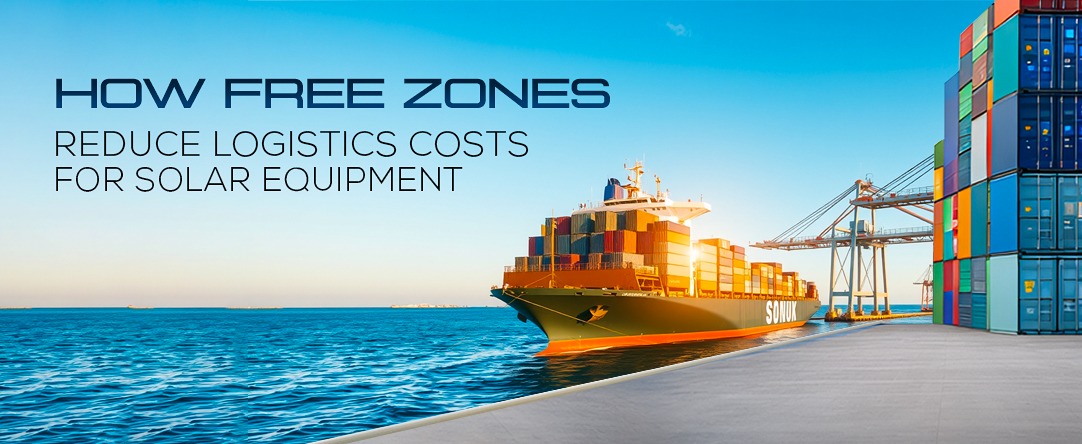
Solar demand across the Gulf and North Africa is rising fast, but what many buyers do not see is how logistics directly influence final system pricing. Import duties, warehousing fees, customs delays, and re-export charges all shape the cost of solar panels in the UAE and across the region.
In 2025, UAE ports such as Jebel Ali and Khalifa Port continued expanding renewable equipment handling capacity to support growing clean energy trade flows. According to Dubai Trade statistics, Jebel Ali Port handled over 13 million TEUs in 2026, reinforcing its role as a logistics gateway for energy equipment across the GCC and Africa. For solar distributors, operating within free zones attached to these ports significantly changes cost structures.
If you are comparing regional solar markets, understanding free zone logistics is essential to evaluating why the cost of solar panels in the UAE can remain competitive compared to neighboring countries.
Why Free Zones Matter in Solar Equipment Trading
Free zones in the UAE offer structured benefits for import, storage, and re-export. Solar modules, inverters, mounting structures, and batteries are frequently shipped in bulk containers from Asia and Europe. Without free zone status, companies would face additional duties and procedural costs.
Key Free Zone Advantages for Solar Traders
- Zero import duty on goods stored for re-export
- Simplified customs clearance procedures
- VAT deferment under specific trade conditions
- Access to integrated warehousing near major ports
For distributors managing regional supply, this reduces holding costs and improves cash flow. Lower overhead at the distribution stage ultimately influences the solar panel cost in the UAE offered to installers and EPC contractors.
Impact on Regional Solar Pricing Across GCC
The UAE acts as a redistribution hub for Kuwait, Bahrain, and parts of North Africa. When equipment is consolidated in free zones, companies can ship smaller volumes to neighboring markets without repeating full import procedures.
For example, when evaluating the cost of solar panels in Kuwait, logistics from UAE free zones often provide more competitive freight routes than direct overseas shipping. Similarly, suppliers serving Bahrain analyze how centralized warehousing influences the cost of solar panels for Bahrain homes through optimized batch deliveries.
Reduced Double Handling and Storage Charges
Traditional trade routes often involve:
- Import clearance in one country
- Inland transport to secondary warehouse
- Re-export documentation
- Additional storage fees
Free zone operations streamline these layers. This is particularly relevant for high-value components such as lithium batteries and hybrid inverters.
Supporting Competitive Residential and Commercial Markets
As rooftop solar adoption expands, buyers frequently search for how much solar panels cost in the UAE before committing to installations. Pricing transparency increasingly depends on supply chain efficiency rather than just hardware costs.
According to the International Renewable Energy Agency’s 2024 regional cost report, global solar module prices declined further compared to previous years, but regional logistics and compliance costs still determine final installed system pricing. Efficient trade infrastructure ensures those global reductions are reflected locally.
In Egypt, where demand for distributed solar continues to grow, the solar panel system price in Egypt can benefit indirectly from UAE-based distribution hubs that shorten procurement cycles.
Free Zone Infrastructure and Digital Trade Advancements
Modern free zones in the UAE are integrating digital customs clearance systems and AI-driven inventory management. This improves shipment visibility and reduces clearance delays.
Smart Warehousing for Renewable Equipment
Advanced facilities now provide:
- Temperature-controlled storage for batteries
- Real-time inventory tracking
- Automated documentation processing
- Integrated freight forwarding services
Such infrastructure enhances distribution efficiency for installers who require fast delivery timelines for rooftop and utility-scale projects.
For companies offering free solar panel installation in the UAE under promotional financing programs, reliable logistics ensure installation commitments are met without delay penalties.
Risk Management and Currency Stability
Another overlooked advantage of UAE free zones is financial stability. Transactions conducted in stable currencies reduce exposure to exchange rate volatility compared to direct imports into certain African markets.
For suppliers planning cross-border distribution, operating from the UAE allows better hedging strategies and predictable cost management. This consistency directly influences pricing comparisons when customers evaluate the cost of solar panels in the UAE against regional alternatives.
Frequently Asked Questions
Do free zones eliminate all import costs for solar equipment?
Free zones remove or defer certain duties when goods are stored for re-export. However, equipment entering the UAE mainland market may still follow applicable VAT and compliance procedures. Companies like Maxell Power structure operations carefully to optimize these benefits.
How does this impact residential pricing?
Lower warehousing and duty costs help distributors maintain competitive solar panel costs in UAE offerings. Efficient logistics reduce overhead that would otherwise be passed to homeowners.
Can free zones reduce project delays?
Yes. Simplified customs processes and proximity to ports shorten lead times. This is important for both commercial and residential installations.
Is it cheaper to import directly into Kuwait or Bahrain?
It depends on shipment size and compliance requirements. In many cases, consolidated shipments from UAE free zones provide better economies of scale when assessing the cost of solar panels in Kuwait or Bahrain.
Does logistics affect financing offers?
Absolutely. For companies offering structured payment plans or free solar panel installation UAE campaigns, predictable supply chain costs support stable pricing models.
Are You Leveraging Free Zone Advantages Strategically?
Solar markets across the GCC and North Africa are becoming more price sensitive and logistics driven. Free zone infrastructure in the UAE offers measurable advantages for distributors and project developers who want to stay competitive.
If you are evaluating regional procurement strategies or comparing the cost of solar panels in the UAE with neighboring markets, schedule a call with Maxell Power to explore optimized logistics models that reduce overhead and strengthen your renewable energy supply chain.
