Deye vs Maxell Power: Which Solar Inverter and Battery Solutions Are Better for Iraq and Afghanistan?
June 30, 2026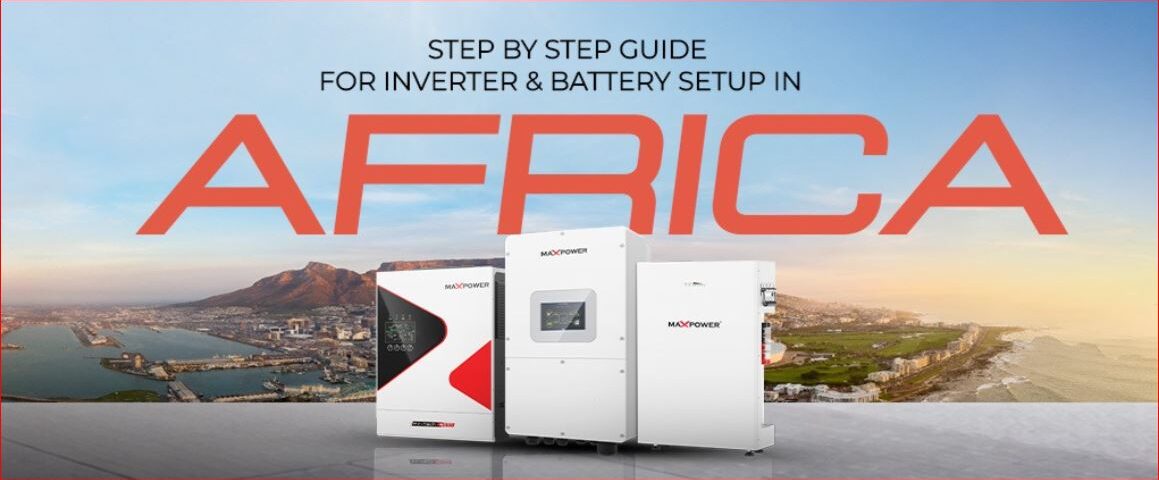
Africa’s solar market is adding capacity at a pace that consistently surprises outside observers. The continent added approximately 4.5 GW of new solar PV capacity in 2025, a 54% increase from 2024. Behind that headline number are hundreds of thousands of individual system installations across Nigeria, Kenya, Ghana, Ethiopia, Zambia, Tanzania, and dozens of other markets. Many of these installations are being completed by local technicians with varying levels of formal training, and the quality of the setup process — particularly the inverter configuration and battery commissioning — determines whether the system performs reliably for a decade or creates ongoing problems from day one.
This step-by-step guide covers the complete inverter and lithium battery setup process for African residential and small commercial solar installations, written for both technically trained installers and informed buyers who want to understand what a correct installation involves.
Step 1: Confirm System Sizing Before Any Hardware Arrives
The most common and costly installation error in African solar projects is proceeding with equipment delivery before the load has been properly calculated. If the inverter is undersized for the peak simultaneous load or the battery is undersized for the overnight backup requirement, no amount of correct wiring fixes the fundamental mismatch.
Before installation begins, confirm:
- Total simultaneous running load in watts, including all appliances operating during peak evening use
- Highest startup-draw appliance, typically an AC compressor or refrigerator motor, and its startup surge in watts
- Required backup duration in hours based on the local grid outage pattern
- Available solar generation hours per day for the installation location
Use these figures to confirm the inverter’s continuous rating exceeds the running load with 25% headroom, the inverter’s surge rating exceeds the startup draw, and the battery’s rated capacity at 80% usable depth exceeds the load multiplied by backup duration.
Maxell Power’s hybrid solar inverters and lithium batteries are available in a range of capacities to match different African home and business profiles.
Step 2: Plan the Physical Installation Layout
Before drilling a single hole, plan the physical layout with cable lengths in mind. The goal is to minimize DC cable run length between panels and inverter and between battery and inverter because DC cables carry higher current and generate more resistive heat loss per meter than AC cables.
Ideal layout principles:
- Inverter mounted on an interior wall closest to the battery bank location, minimizing the battery-to-inverter cable run
- Battery bank positioned in a ventilated, shaded indoor space away from direct sun exposure
- Panel cables routed through conduit where they pass through walls or under roofing to protect against rodent damage and UV degradation
- Adequate clearance on all inverter ventilation sides, minimum 20 cm
For installations in West African tropical climates with high humidity, confirm the inverter’s IP rating matches the installation environment. Outdoor or semi-outdoor locations require IP66-rated units. Maxell Power’s hybrid inverter range includes IP66 configurations for these environments.
Step 3: Mount the Inverter and Battery
Mount the inverter on a solid wall bracket rated for the inverter’s weight. Most residential hybrid inverters weigh 15 to 30 kg. The bracket should be fixed into the wall structure, not just surface plaster, with appropriate anchor bolts.
Mount or position the battery bank on its designated surface. Floor-standing batteries should be on a level, structurally sound floor. Wall-mounted battery units must use the manufacturer’s specified bracket system with the correct wall anchor type for the wall construction material.
Confirm the battery’s ventilation requirements are met. LiFePO₄ batteries from Maxell Power’s range do not require ventilation for gas release (unlike lead-acid) but do benefit from ambient airflow around the enclosure to manage operating temperature in hot climates.
Step 4: Wire the Battery Bank
Connect the battery bank to the inverter’s battery terminals using correctly sized DC cables. Cable sizing depends on the maximum discharge current and cable run length. For most residential lithium battery installations with run lengths under 2 meters, 35 mm² to 50 mm² cable is appropriate. Longer runs require larger cross-section cables to limit resistive heating.
Install appropriately rated DC fuses or circuit breakers on the positive cable between the battery and inverter before making the final connection. This fuse protects against short-circuit events. Never complete the battery-to-inverter connection without the fuse in place.
Connect battery bank cables with correct polarity. Reversed polarity connections cause immediate and usually irreparable inverter damage. Confirm positive to positive and negative to negative before making any connection, and double-check before switching on.
Step 5: Connect Solar Panel Strings
Connect the solar panel MC4 connectors to the inverter’s PV input terminals. Confirm the string voltage under open-circuit conditions does not exceed the inverter’s maximum DC input voltage specification. On cold African mornings, panels may produce higher open-circuit voltage than their standard test conditions rating. Calculate the worst-case open-circuit voltage using the panel’s temperature coefficient before confirming the string configuration.
Connect one string to each independent MPPT input channel. If the inverter has dual MPPT, split the panel array across both channels for independent optimization.
Step 6: Configure the Inverter Settings
This step is where many African installations go wrong. Factory default settings are often configured for lead-acid batteries. Connecting a LiFePO4 lithium battery without updating the battery chemistry settings results in incorrect charging that degrades the battery without immediate visible symptoms.
Update the following settings in the inverter’s configuration menu:
- Battery type: LiFePO4 or Lithium
- Absorption voltage: 58.4V for a 48V system
- Float voltage: 53.6V for a 48V system
- Maximum charge current: within the battery’s rated specification
- Low battery cutoff voltage: as specified by the battery manufacturer
- Working mode priority: Solar first, then battery, then grid for typical African off-grid priority applications
Step 7: Commission and Test the System
Before handing over to the client:
- Verify solar generation is registering on the inverter display during daylight
- Verify battery state of charge is increasing during solar generation hours
- Simulate a grid failure by disconnecting the grid input and confirm the inverter transitions to battery/solar seamlessly
- Verify all appliances on the backup circuit continue operating through the simulated outage
- Check the inverter’s fault log for any codes generated during commissioning
Document the inverter settings configuration, the battery connection layout, and the system’s baseline daily generation figure for the client’s records. This baseline figure is what future performance monitoring is compared against.
Frequently Asked Questions
What is the most common lithium battery installation mistake in African solar setups?
The most common mistake is leaving the inverter configured on lead-acid battery settings after connecting a lithium battery. This causes chronic incorrect charging that degrades LiFePO4 cells without immediate visible symptoms. Always update the inverter’s battery chemistry profile to LiFePO4 before commissioning.
What cable size is needed for a lithium battery to inverter connection in Africa?
For residential installations with battery-to-inverter runs under 2 meters at typical residential discharge currents, 35 mm² to 50 mm² DC cable is appropriate. Longer runs or higher discharge current applications require larger cross-section cables. Always install a correctly rated DC fuse on the positive cable before the inverter connection.
How do I know if my inverter is compatible with Maxell Power lithium batteries in Africa?
Most modern hybrid inverters from 2021 onward support LiFePO₄ battery profiles. Confirm the inverter has a LiFePO₄ or lithium battery mode in its settings and that the BMS communication protocol is compatible.
What working mode should I set for off-grid use in an African installation?
For African installations where grid power is unavailable for extended periods, set the inverter to Solar Priority mode. This ensures solar generation powers loads directly before drawing from the battery, extending battery cycling lifespan and maximizing the use of free solar generation during daylight hours.
Where can I source Maxell Power inverters and batteries for African installations?
Maxell supplies power from its Dubai Jebel Ali base with established logistics to major African markets, including Kenya, Nigeria, Ghana, Ethiopia, Tanzania, and Zambia.
Is Your Next African Solar Installation Set Up to Perform for a Decade?
The difference between a correctly commissioned system and one that was assembled but not configured properly shows up within the first six months of operation, either in fault codes, short backup times, or battery degradation faster than expected. Getting the setup right from day one is a 30-minute investment that pays back across the system’s entire lifespan.
Explore Maxell Power’s product range for Africa and contact the team for technical guidance on your next installation.