
Why IP66 Technology is Ideal for Kuwait
August 24, 2026
How to Choose the Best Hybrid Solar Inverter for Dubai Villas in High Heat Conditions
September 1, 2026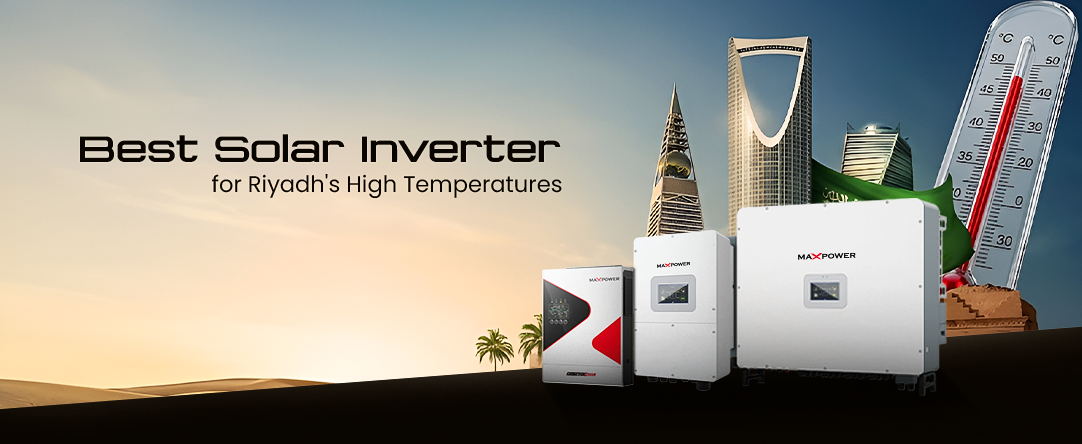
Riyadh is famous for its relentless sunshine, but that same abundant sunlight brings a serious challenge. During summer, temperatures routinely climb past 45°C, and rooftop surfaces often become significantly hotter than the surrounding air. While this intense solar radiation is perfect for generating clean electricity, it creates a harsh operating environment for the electrical heart of any setup: the solar inverter.
In a mild climate, a standard inverter might perform adequately. In Riyadh’s desert environment, that same unit can overheat, throttle its output, or suffer premature failure. When an inverter derates due to excessive heat, your entire solar panel system produces less electricity, which directly reduces your savings and extends the payback period. That is why choosing the best solar inverter for Riyadh is not simply about comparing brands or looking for the lowest price. It is about selecting equipment specifically engineered to survive extreme heat, dust, and voltage stress while delivering consistent, efficient performance year after year.
This guide explains exactly what makes a high‑temperature solar inverter ideal for Riyadh and the wider Saudi Arabian desert, which technical features matter most, and why a hybrid solar inverter paired with quality components represents the smartest long‑term investment for homes, villas, offices, and industrial facilities across the region.
Inside every solar panel system, the solar inverter works nonstop to convert the direct current produced by your panels into alternating current that powers air conditioners, lighting, and machinery. This conversion process generates internal heat. Under normal conditions, the inverter’s cooling system dissipates that heat easily. But when ambient temperatures in Riyadh push past 40°C and rooftop installations absorb even more thermal energy, a conventional inverter must fight an uphill battle to stay cool.
If the internal temperature crosses the safety threshold, the inverter automatically reduces its power output in a process called thermal derating. This means you lose valuable generation precisely during the afternoon hours when the sun is strongest and your cooling demand is highest. Over time, repeated exposure to extreme heat degrades capacitors, fans, and circuit boards, leading to early failure and costly replacements.
When evaluating the best solar inverter in Saudi Arabia for Riyadh’s conditions, several technical characteristics separate professional desert‑grade equipment from standard residential models. First, the unit must offer a wide operating temperature range, ideally certified to perform efficiently at ambient temperatures well above 45°C without rapid derating. This ensures that your energy production remains stable even on the hottest afternoons.
For properties in Riyadh, a hybrid solar inverter is almost always the best option because it delivers far greater flexibility than a simple grid‑tied or off‑grid alternative. A hybrid solar inverter can send solar power directly to your loads during the day, charge a connected battery bank for use at night, and interact seamlessly with the utility grid to export surplus energy or import power when solar production is insufficient.
Maxell Power understands that regions like Riyadh and the broader Middle East demand solar inverters that exceed ordinary specifications. Our hybrid solar inverter lineup includes high‑voltage models built specifically for demanding installations where heat, dust, and continuous operation are daily realities. These units feature reinforced thermal architectures that maintain peak efficiency even when mounted on exposed rooftops under direct sun.
Constructed with durable enclosures and intelligent cooling systems, Maxell Power inverters use advanced MPPT algorithms to track the maximum power point continuously, even as irradiance shifts and surface temperatures fluctuate throughout the day. They are also engineered to pair seamlessly with modern lithium batteries, enabling faster charging, deeper discharges, and significantly longer cycle life compared to older lead‑acid technology.
For anyone searching for the best solar inverter for Riyadh, combining a Maxell Power hybrid solar inverter with high‑efficiency solar panels creates a resilient ecosystem that turns extreme heat from a threat into a productive energy advantage. To review specifications and pricing for systems tailored to high‑temperature regions, visit our hybrid solar inverter collection.
Even the finest solar inverter cannot compensate for mismatched or low‑quality components elsewhere in the system. In Riyadh’s climate, it is essential to pair your heat‑resistant inverter with solar panels that feature a low temperature coefficient. This specification indicates that the panels lose less efficiency as they heat up, which is critical during midday when rooftop temperatures peak. Monocrystalline or bifacial modules with strong heat tolerance are excellent choices for desert installations because they sustain higher output during the exact hours when the sun is most intense.
The battery system is equally important. A premium lithium battery for solar storage can charge and discharge efficiently even in warm installation environments, offering superior performance and safety compared to traditional lead‑acid alternatives under thermal stress. When your hybrid solar inverter, heat‑tolerant solar panels, and lithium battery are correctly sized and configured together, your solar energy system will deliver predictable savings and dependable backup power for decades.
Learn more about compatible storage options on our Maxell Power lithium battery page, and explore high‑temperature optimized modules in our solar panel range.
Even the best solar inverter in Saudi Arabia requires thoughtful installation to reach its full potential. In Riyadh, installers should position the inverter where it will receive some shade or cover during peak afternoon hours, such as under a protective canopy, inside a ventilated utility room, or on a wall that does not face direct western sun. Maintaining at least twenty centimeters of clearance around the unit allows hot air to escape freely and prevents heat buildup inside the enclosure.
Ongoing maintenance is equally vital. Dust should be gently removed from air vents and casing surfaces every few weeks, particularly after sandstorms. If your inverter uses replaceable air filters, inspect and clean them according to the manufacturer’s recommended schedule. Monitoring generation data through the inverter’s smartphone app or web portal will help you identify any abnormal temperature‑related drops in output before they develop into serious faults.
Riyadh’s combination of extreme temperatures, intense solar radiation, and dusty conditions makes it one of the most demanding environments on Earth for standard electrical equipment. Yet it is also one of the most rewarding locations for well‑designed solar energy systems. By selecting the best solar inverter for high temperatures, specifically a durable hybrid solar inverter with advanced thermal protection and dust resistance, you safeguard your investment, maximize daily energy production, and ensure uninterrupted power for cooling and daily life.
Maxell Power provides professional solar solutions built to thrive in desert climates, integrating rugged inverters, efficient solar panels, and reliable lithium battery storage into complete, high‑performance packages. If you are planning a solar panel system in Riyadh or anywhere in Saudi Arabia, choosing heat‑resistant equipment from the outset is the foundation of long‑term performance and financial success.
Contact Maxell Power today for expert guidance on selecting the ideal solar inverter and components for your high‑temperature installation.
What is the best solar inverter for Riyadh’s high temperatures?
The best solar inverter for Riyadh is a heat‑resistant hybrid solar inverter that carries a high IP rating, a wide operating temperature range, and intelligent thermal management. Maxell Power hybrid solar inverters are specifically engineered to handle extreme desert heat while maintaining high efficiency and protecting connected batteries and household appliances.
Can a standard solar inverter survive in Riyadh’s 50°C summer heat?
Standard solar inverters often derate or shut down when internal temperatures exceed safe limits under 50°C ambient conditions. For Riyadh, it is essential to install a high‑temperature solar inverter rated for harsh climates, with dust protection and robust cooling architecture to ensure safe, continuous operation.
Why is a hybrid solar inverter better than a standard grid‑tied inverter for Saudi Arabia?
A hybrid solar inverter is generally superior for Saudi Arabia because it simultaneously manages solar generation, battery charging, and grid interaction. This allows users to store low‑cost daytime solar energy for evening use, reduce dependence on peak‑tariff grid power, and maintain seamless backup during outages.
What is the typical solar inverter price in Riyadh for a quality residential unit?
Solar inverter prices in Riyadh depend on capacity, phase type, and feature set. A high‑quality single‑phase hybrid solar inverter for residential use may start from a few thousand Saudi Riyals, while larger three‑phase commercial units cost more. Choosing a durable, heat‑resistant model typically delivers far better long‑term value than selecting the cheapest available option.
Should I use lithium batteries with my solar inverter in a hot climate like Riyadh?
Yes, lithium batteries are strongly recommended for hot climates when paired with a compatible hybrid solar inverter. Modern lithium batteries offer excellent heat tolerance, faster charging, longer lifespan, and deeper discharge capability compared to lead‑acid alternatives, making them ideal for storing solar energy in Riyadh’s demanding environment.
