
Maximizing the Life of Lithium-Ion Batteries in the Middle East and Africa
July 20, 2026
Nigerian Homeowners’ Guide to 1–6 kW Solar Systems
August 2, 2026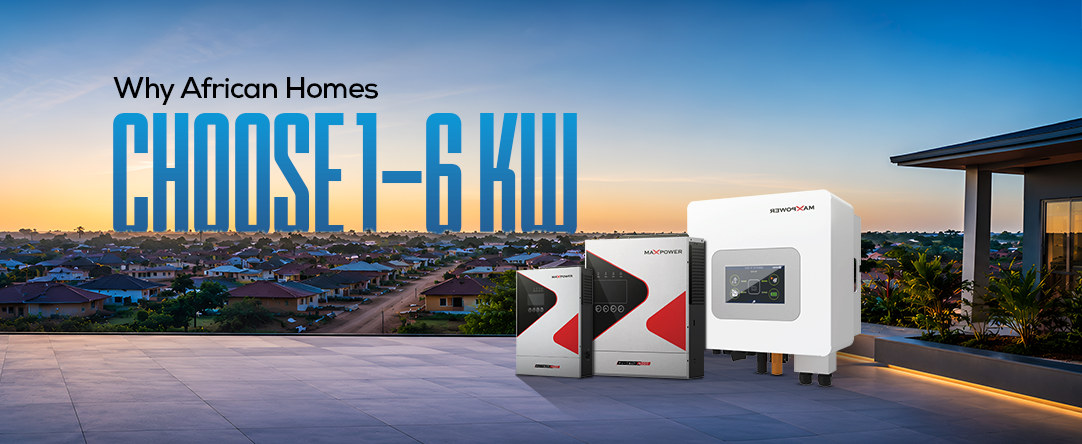
Walk through any developing residential neighborhood from Lagos to Nairobi, and you will notice a quiet shift happening on rooftops. The era of oversized, expensive solar farms is giving way to something far more practical. The 1–6 kW solar systems have become the undisputed backbone of home energy for a very logical reason: they match exactly what an average African household actually consumes daily. Unlike the generic advice you find online, the real story is about granular control, battery chemistry evolution, and how modern loads have changed.
Recent data from the International Energy Agency (IEA) for 2024 indicates that over 65% of new solar installations in Sub-Saharan Africa fall within this 1 to 6 kW range. This is not a coincidence. Utility grids in nations like Nigeria, Sudan, and even parts of Morocco face instability not due to total capacity failure but because of frequent frequency drops. A 1–6 kW solar system setup allows a home to island itself from the grid during these brownouts without paying for massive overcapacity.
The Load Matching Revolution
Here is the nuance most installers miss. Five years ago, air conditioners were the primary driver for larger systems. Today, the explosion of energy-efficient DC inverter ACs and induction cooking plates has changed the math. A 1.5 kVA window unit now runs on just 450 watts. A modern refrigerator pulls 80 watts. Your entire entertainment center, lights, fans, and a small water pressure pump total less than 1.2 kW during peak evening hours. Why would anyone pay for a 10 kW system when their peak load never crosses 4 kW?
The hybrid solar inverters available today from manufacturers like Maxell Power have embedded smart load management. You do not need a massive array. You need a system that prioritizes. A 3 kW hybrid inverter can comfortably run a deep freezer, a TV, six LED lights, a laptop, and a ceiling fan simultaneously while charging a lithium battery in the background.
Why 6 kW Is the New Ceiling
Pushing up to the 6 kW end of the 1–6 kW solar systems spectrum covers the “worst-case scenario” for most African homes. Think of a Friday evening in Sudan during a 45-degree Celsius heatwave. You have two AC units running, a water dispenser, a washing machine, and a router. That load caps at roughly 5.2 kW. A low kW solar system approach forces homeowners to be honest about their loads rather than oversizing on fantasy numbers.
Furthermore, the financing ecosystem has adapted. Microfinance institutions in Kenya and Nigeria now offer standardized loan products specifically for 1–6 kW solar systems. They know the payback period is exactly 18 to 24 months compared to diesel generators. Oversizing to 10 kW extends that payback to nearly 5 years, making the financial model collapse.
Technical Edge of Lower Kilowatt Arrays
Running a smaller array means your solar panels operate closer to their maximum power point more often. A 6 kW array on a Maxpower panel series achieves full production by 10 AM. A 15 kW array might be clipping or underutilized until noon. For urban homes with shading from neighbors or limited roof space in places like Lagos, the compact footprint of 12 to 18 panels (typical for 6 kW) is a logistical blessing.
Voltage and Safety in Conflict Regions
For nations like Sudan and parts of the Sahel experiencing conflict, technical safety becomes paramount. Lower kilowatt systems operate at lower DC voltages. You avoid the lethal 600V DC arcs associated with larger commercial systems. This is critical when infrastructure is compromised and you cannot rely on rapid shutdown devices.
Frequently Asked Questions
How do I know if a 3 kW or a 6 kW system is right for my home?
You need to audit your peak simultaneous load. Turn on everything you would realistically run at once during a grid outage. Add the wattages. If the total is 3,500 watts, you need a 5 kW or 6 kW 1–6 kW solar system setup because inverters should not run at 100% capacity continuously. Maxell Power technicians often recommend the 6 kW hybrid solar inverters for families with two refrigerators or a deep freezer to leave a 25% safety margin.
Can a 1–6 kW system run a water pumping solution?
Yes, but you must size carefully. A standard borehole pump for a home consumes 750 to 1,500 watts during startup surge. Your water pumping solutions need a soft starter if paired with a 3 kW inverter. For a 6 kW hybrid solar inverter, most residential pumps run directly without modification. Consult the pump’s LRA (locked rotor amperage) before committing.
What is the real lifespan of lithium batteries in low kW systems?
With proper thermal management, a lithium-ion battery in a 5 kW system cycled daily to 80% depth of discharge will last 8 to 10 years in African climates. The mistake is installing batteries in unventilated metal enclosures. Heat is the killer. Keep your battery bank below 35 degrees Celsius to hit that lifespan. Maxell Power’s lithium battery series includes a thermal sensor that throttles charge current to prevent degradation.
Are IP66 inverters really necessary for dusty environments like Sudan?
Absolutely. IP66 rating means dust tight and protected against powerful water jets. In conflict regions or arid zones, the fine silica dust destroys standard IP20 inverters within 18 months. An IP66 inverter allows you to install the unit outside the living space, which is safer for homes with children. You reduce fire risk and cooling loads simultaneously.
How does the new 2024 solar panel efficiency affect my roof space?
The latest Maxpower series panels have reached 22.5% efficiency. This means you now need only 18 square meters of roof space to generate 4 kW. Older panels from 2020 required 27 square meters. This efficiency leap is why 1–6 kW solar systems fit even on small urban bungalows or apartment rooftops in Nigeria and Kenya.
Should You Oversize Your Inverter for Future Expansion?
This is the most debated question in African solar circles today. The smart money says buy a 6 kW hybrid solar inverter today even if you only install 2 kW of solar panels now. Why? Inverter electronics are the brain. Panels are the muscle. You can add panels later as prices drop. But replacing an inverter later means rewiring and reconfiguring your battery bank. A 6 kW Maxell Power hybrid solar inverter running with a partial panel load operates at higher efficiency than a maxed-out 3 kW unit struggling near its thermal limits.
Ready to size your own 1–6 kW solar system correctly? Contact the technical sales team at Maxell Power. We provide load calculation sheets and site-specific IP66 inverter recommendations for homes across Nigeria, Kenya, Sudan, and Morocco. Visit our contact page to schedule a no-obligation energy audit.
