

Solar Energy for Abu Dhabi Businesses: The Ultimate Commercial Guide
July 12, 2026
Maximizing the Life of Lithium-Ion Batteries in the Middle East and Africa
July 20, 2026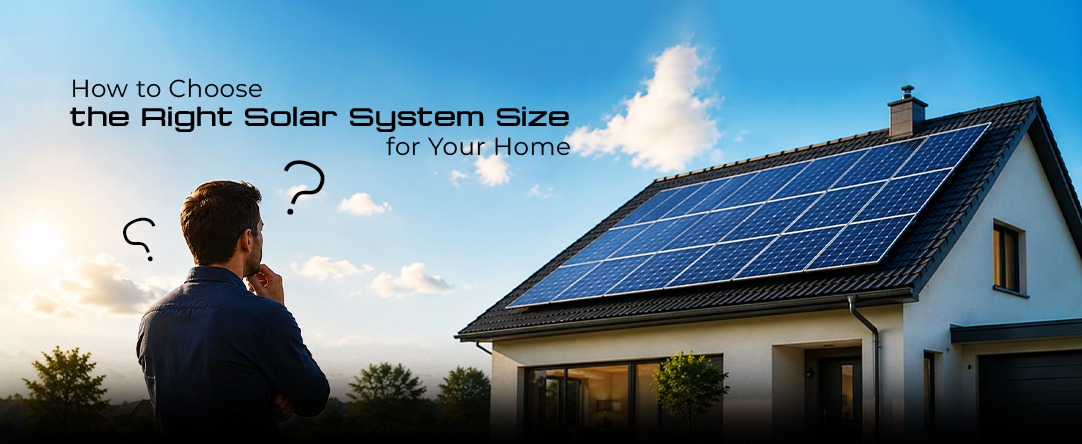
This is the decision that most MEA solar buyers make based on the installer’s recommendation without understanding the calculation behind it. The result is either a system that runs short during evening load shedding or one that was oversized relative to the actual load and cost more upfront than the energy profile justified. Both are avoidable if you understand the four variables that determine the right system size for your specific home.
The Middle East and Africa share one of the world’s strongest solar resources. GCC countries average 5.5 to 7 peak sun hours daily. Sub-Saharan Africa averages 5 to 6.5 across most inhabited regions. This resource advantage means a correctly sized system generates more energy per installed kilowatt than the same system in Europe or North America. Getting the sizing right therefore has a proportionally higher financial impact.
Variable 1: Your Daily Energy Consumption
The foundation of any solar sizing calculation is your actual daily energy consumption in kilowatt-hours. The most accurate source is your utility electricity bill. Look for the monthly kWh figure and divide by 30 for a daily average.
For homes in Gulf markets, including the UAE, Saudi Arabia, Kuwait, and Oman, monthly consumption in summer with air conditioning typically ranges from 1,500 to 4,000 kWh, or 50 to 133 kWh per day for larger villas. For homes in African markets like Kenya, Nigeria, Ghana, and Ethiopia with less intensive cooling loads, monthly consumption is more commonly 200 to 600 kWh, or 7 to 20 kWh per day.
This daily kWh figure is your baseline. Your solar system needs to generate at least this amount on an average day to cover full consumption. In practice, most residential solar systems are sized to cover 70% to 90% of daily consumption, with the grid or generator covering the remainder.
Variable 2: Your Peak Simultaneous Load
System sizing for a hybrid solar installation is not only about daily kWh generation. The inverter must also handle your peak simultaneous load, which is the maximum wattage being drawn at any single moment. This determines your minimum inverter capacity.
Make a list of every appliance running simultaneously during your home’s peak demand period, typically the early evening when air conditioning, cooking appliances, lighting, and entertainment systems are all active:
For a GCC villa with two 2-ton central AC units, kitchen appliances, lighting, and electronics, peak simultaneous load can reach 8 kW to 14 kW. This requires an inverter with a continuous rating of at least 10 kW and surge capacity well above that for compressor startups.
For an African city home with one 1.5-ton split AC, fans, lighting, and a refrigerator, peak simultaneous load is typically 2 kW to 4 kW, suitable for a 5 kW to 6 kW inverter.
Maxell Power’s hybrid solar inverter range covers residential applications from single-phase 6 kW configurations through to three-phase commercial systems for larger Gulf villas and commercial properties.
Variable 3: Your Battery Backup Requirement
The battery bank size is determined by how much energy you need to store for evening and overnight use when solar generation is not available. This depends on your nightly load and the duration of grid outages in your area.
Battery sizing formula: Required usable energy (kWh) = Evening load (kW) × Backup duration (hours)
Divide by 0.80 for LiFePO₄ usable depth to get the rated battery capacity needed.
Example for an African home: 1.5 kW evening load × 8 hours = 12 kWh usable energy needed. At 80% usable depth: 12 ÷ 0.80 = 15 kWh rated battery capacity.
Example for a GCC villa: 4 kW evening load × 6 hours = 24 kWh usable energy needed. At 80% usable depth: 24 ÷ 0.80 = 30 kWh rated battery capacity.
Maxell Power’s lithium battery range covers individual units from compact residential capacities through to large commercial banks with parallel expansion support.
Variable 4: Panel Capacity for Full Daily Recharge
Your panel array must generate enough daily energy to power your daytime loads and fully recharge your battery before the next evening outage cycle. At 5 peak sun hours, a 6 kW panel array generates approximately 30 kWh per day. At 6 peak sun hours in a GCC location, the same array generates 36 kWh.
For the African home example above needing 12 kWh of battery storage plus approximately 6 kWh of daytime load, the total daily solar generation needed is 18 kWh. At 5 peak sun hours: 18 ÷ 5 = 3.6 kW panel capacity minimum. Add 20% for efficiency losses and temperature derating: 3.6 × 1.2 = 4.3 kW. A 5 kW panel array of 9 to 10 panels at 550W each covers this requirement comfortably.
Maxell Power’s solar panel range includes high-efficiency monocrystalline options appropriate for residential and commercial system sizing across MEA conditions.
A Quick Reference Sizing Table for MEA Homes
| Home Profile | Inverter Size | Panel Capacity | Battery Capacity |
|---|---|---|---|
| African small home, 6h outage | 3 to 5 kW | 3 to 4 kW | 10 kWh |
| African medium home, 8h outage | 5 to 6 kW | 5 to 6 kW | 15 kWh |
| GCC apartment, 4h peak cooling | 6 to 8 kW | 6 to 8 kW | 15 to 20 kWh |
| GCC villa, 2 to 3 AC units | 10 to 15 kW | 10 to 15 kW | 25 to 40 kWh |
Frequently Asked Questions
How do I calculate the right solar system size for my home in the UAE?
Start with your monthly kWh from your DEWA or ADDC bill and divide by 30 for a daily figure. Identify your peak simultaneous load by listing all appliances running at once during the busiest evening hour. Use these two numbers to determine your minimum inverter capacity (covers peak load plus 25% headroom) and your panel capacity (covers daily kWh from available peak sun hours).
What solar system size is typical for a Nigerian family home?
A Nigerian family home with a 1.5-ton split AC, refrigerator, fans, and lighting typically needs a 4 kW to 6 kW hybrid inverter, 5 kW to 6 kW of solar panels, and 10 to 15 kWh of LiFePO4 battery storage for 8-hour overnight backup coverage. For extended outage windows in cities with unreliable grid supply, stepping up to 15 to 20 kWh of battery storage provides more reliable full-night coverage.
Does the solar system size I need change between summer and winter in the GCC?
Yes, significantly. Gulf cooling loads in summer are 2 to 3 times higher than winter loads. A system sized for summer coverage will be oversized for winter, which is generally acceptable as excess generation goes to the grid under net metering or remains stored in the battery. Do not size the system for winter needs only—the system will run short during the peak summer months that coincide with the highest electricity costs.
Is a larger battery always better for an African home solar system?
Not always. A battery larger than your panel array can fully recharge in a day will regularly operate in a chronically undercharged state, which affects LiFePO₄ cell health over time. Match battery capacity to both the backup energy requirement and the panel array’s daily generation capacity. If these conflict, size up the panel array rather than restricting battery capacity.
How many solar panels do I need for a 10 kW system in the Middle East?
A 10 kW solar system in the Middle East typically uses 16 to 18 panels at 580W to 600W each, producing 9.3 kW to 10.8 kW of DC capacity. The slight oversizing above the 10 kW inverter rating compensates for panel thermal derating in Gulf summer temperatures and ensures the inverter operates at rated output for the longest daily window.
Have You Sized Your Home Solar System Against Your Actual Load Profile?
A solar system sized from a generic recommendation or a neighbor’s experience may perform acceptably. A system sized from your actual consumption data, peak load calculation, and battery backup requirement performs correctly. The 30 minutes spent on the calculation before any equipment is ordered is the highest-value part of the entire solar buying process.
Contact Maxell Power for a load-based system sizing consultation for your home across any MEA market, or read the latest solar insights on the Maxell Power blog.
